
WhatsApp Usernames: What They Mean for Privacy in 2026
On June 29, 2026, WhatsApp opened username reservations for its more than three billion users. It’s the biggest identity change the app has made since launch, and it directly answers a question people have asked for years: why does starting a WhatsApp chat require handing over your phone number?
The reservation window is open now, but the full feature, letting people message you using only a username, ships gradually over the coming months. If you run a business, manage client communication, or just care about how much of your personal information sits one tap away from a stranger, here’s what’s actually changing and what to do about it.
What WhatsApp Announced
WhatsApp VP of Product Alice Newton-Rex described the change as a core privacy feature, not a cosmetic one. Today, anyone who has your phone number can message you on WhatsApp. Once usernames roll out fully, you’ll be able to let people contact you using a handle instead, without ever revealing your number.
The key details so far:
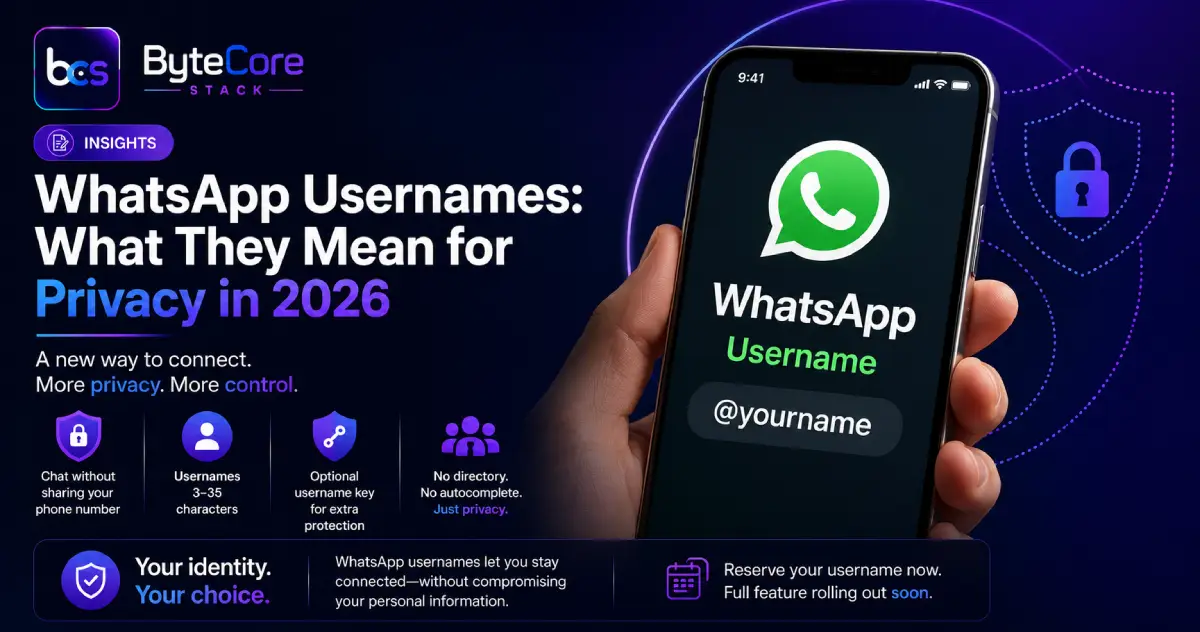
- Usernames must be 3 to 35 characters.
- There is no public directory and no autocomplete. Someone has to know your exact username to message you the first time.
- An optional username key (a short code) adds a second layer, so only people with both the username and the key can reach you.
- Businesses and creators can claim a username that matches their existing Instagram or Facebook handle.
- A phone number is still required to create a WhatsApp account, even after you switch to username-based contact.
- WhatsApp says it has added abuse-pattern detection and limits on how many new people one account can contact, to slow down spam and scraping.
Reservation takes a few seconds: open the latest version of WhatsApp, go to Settings, then Account, then Username. WhatsApp will notify you in-app once the contact feature itself goes live in your country.
Why This Is a Big Deal for Privacy
A phone number isn’t just a way to reach someone. It’s tied to banking apps, government IDs, delivery addresses, and years of data brokers connecting the dots. Every time you hand it to a new contact, a vendor, or a WhatsApp group, you’re widening the surface area for spam, scams, and SIM-swap style attacks.
Usernames break that link. You can give a client, a customer, or someone you met once a way to reach you on WhatsApp without giving them anything that traces back to your real identity, your carrier, or your other accounts. This is the same model Telegram and Signal have used for years, and WhatsApp catching up here closes a long-standing gap between it and its privacy-first competitors.
The Risks Nobody’s Talking About
A username system isn’t free of trade-offs. At three billion users, popular and brandable handles will get claimed fast, and squatting is already happening during the reservation window. Expect impersonation attempts, especially around recognizable business names, public figures, and anything tied to money or support requests.
There’s also a discoverability cost. No directory and no autocomplete is good for privacy, but it means a username is only useful if you actually share it somewhere people will see it, a bio, a website, a business card, an email signature. That’s a new piece of digital real estate worth planning for now, before the contact feature fully launches.
WhatsApp vs Telegram vs Signal: How Usernames Compare
| Feature | WhatsApp (2026) | Telegram | Signal |
|---|---|---|---|
| Phone number required to sign up | Yes | Yes | Yes |
| Phone number hidden from contacts by default | Opt-in, rolling out | Yes | Yes |
| Public username directory | No | Searchable by default | No |
| Username length | 3–35 characters | 5–32 characters | 4–32 characters |
| Extra contact key/code option | Yes (username key) | No | No |
| Claim social handle (Instagram/Facebook) | Yes, for eligible accounts | No | No |
WhatsApp’s no-directory, no-autocomplete approach is closer to Signal’s privacy stance than Telegram’s searchable handles. The username key is a feature neither competitor offers, and it’s a smart answer to the spam problem a system this size will inevitably attract.
What Businesses Should Do Right Now
If your business, agency, or personal brand runs support or sales through WhatsApp, treat this rollout the way you’d treat a domain name release.
- Reserve your brand name today. If you have a matching Instagram or Facebook handle, claim it through the linked-account option as soon as it’s available to you.
- Audit where your number is exposed. Once username-only contact is live, you can decide what to keep public and what to retire from bios, ads, and storefronts.
- Update customer-facing material in stages. Don’t drop your phone number everywhere immediately, the feature is rolling out by country and account, so a sudden switch could break contact for some customers.
- Watch for impersonators. Search your brand name as soon as usernames are searchable internally on your account, and report lookalikes early.
This kind of identity shift is exactly the sort of fast-moving platform change covered in our piece on how 2026’s tech pressures are reshaping business priorities, and it fits a broader pattern of platform-level identity control that’s worth tracking if WhatsApp is part of your customer communication stack.
What This Means for Email and Reliable Contact Channels
One thing usernames don’t fix: WhatsApp is still a closed platform you don’t own. If your business leans entirely on WhatsApp for customer contact, a username change, an account restriction, or a policy update can disrupt how customers reach you overnight. A channel you fully control, like transactional and marketing email from your own WordPress site, remains the backbone worth investing in alongside any messaging app. If you haven’t audited your outbound email reliability recently, our SMTP Manager update walks through what changed and why deliverability matters more as customer contact channels fragment.
Frequently Asked Questions
When can I actually use a WhatsApp username to message people?
Reservations opened June 29, 2026. The full ability to be contacted by username instead of phone number rolls out gradually by country over the following months, with an in-app notification when it reaches your account.
Do I still need a phone number to use WhatsApp?
Yes. A phone number is still required to create and verify a WhatsApp account. Usernames only change who can see that number once you’re messaging.
Can people search for my WhatsApp username?
No. WhatsApp has confirmed there is no public directory and no autocomplete suggestions. Someone needs to know your exact username to message you for the first time.
What is a WhatsApp username key?
It’s an optional short code you can attach to your username. If enabled, people need both your username and the key to reach you, adding a layer of spam and impersonation protection.
Should my business reserve a username now?
Yes. With over three billion users on the platform, recognizable and brandable usernames will be claimed quickly. Reserving early protects your brand from impersonation and squatting.
The Bottom Line
WhatsApp usernames close a real privacy gap, but they’re rolling out gradually and the underlying risks, impersonation, squatting, and over-reliance on a platform you don’t control, are worth planning for now rather than after launch. Reserve your handle, audit where your number is public, and keep building owned channels like your website and email list alongside whatever WhatsApp ships next.
Need help auditing your site’s security, communication stack, or AI-readiness as platforms like this keep shifting? ByteCore Stack builds the WordPress tooling that keeps your business resilient no matter what the platforms decide next.
Explore ByteCore Stack’s WordPress plugins:
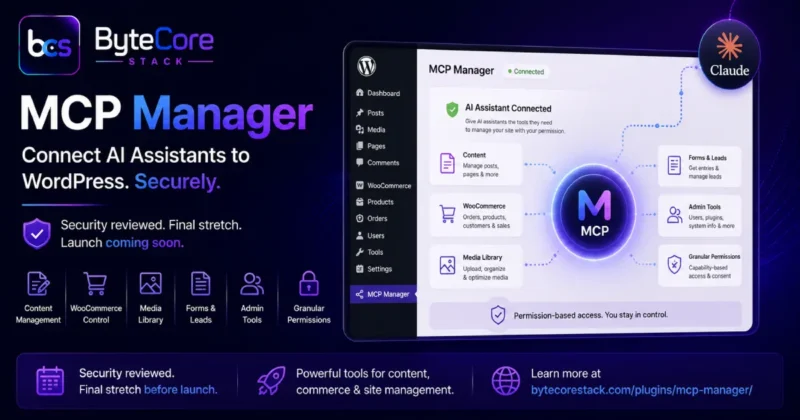
- MCP Manager – connect AI assistants like Claude directly to your WordPress site
- SMTP Manager – reliable transactional email delivery for WordPress
- Lightsail Manager – manage AWS Lightsail CDN distributions from your dashboard