
India Temporarily Bans Telegram — Here’s the Full Story
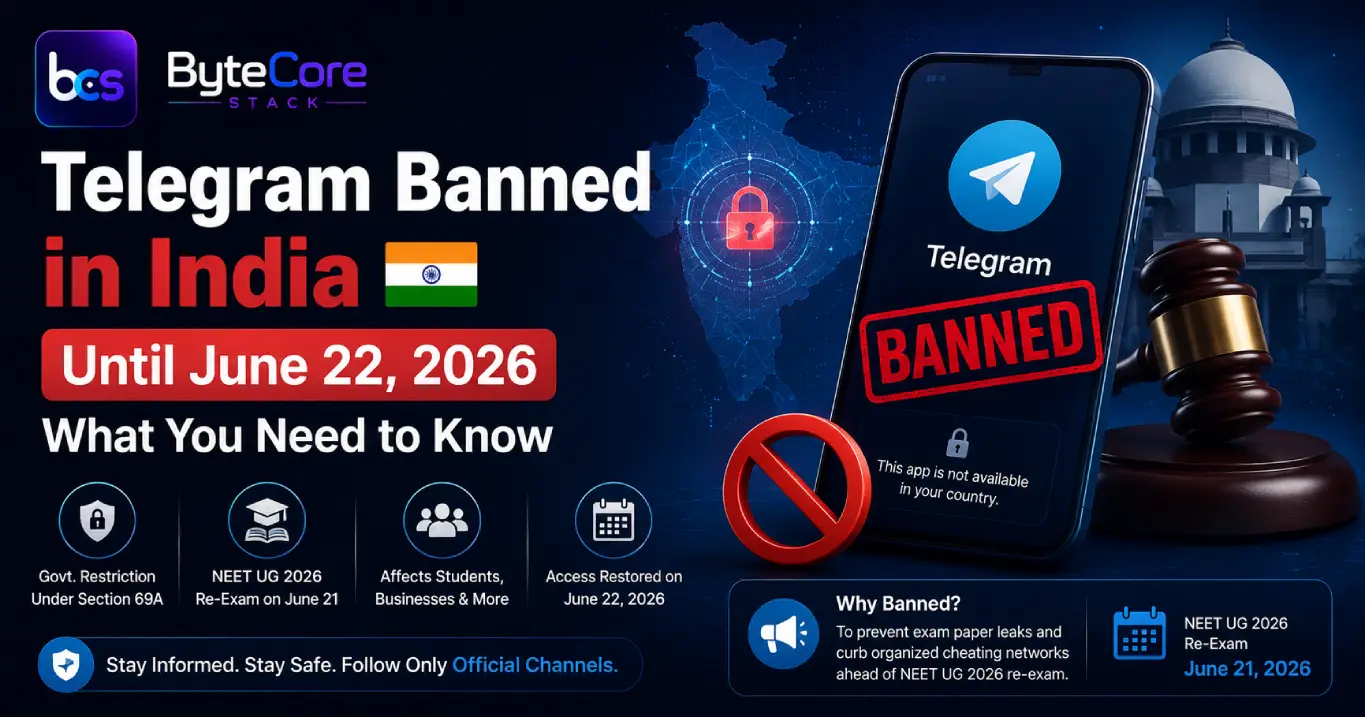
If you tried opening Telegram in India today and found it blocked, you’re not alone. The Indian government has officially restricted access to Telegram until June 22, 2026 — and the reason is directly tied to one of the country’s most high-stakes examinations: NEET UG 2026.
This is one of the most significant platform restrictions India has imposed on a major messaging app in recent years. Here’s everything you need to know — why it happened, who’s affected, and what it means going forward.
Why Was Telegram Banned in India?
The ban stems from the controversy surrounding the NEET UG 2026 examination. The original exam, held on May 3, 2026, was cancelled after allegations of a question paper leak. A re-examination was subsequently scheduled for June 21, 2026.
Ahead of the re-exam, the National Testing Agency (NTA) recommended that the Ministry of Electronics and Information Technology (MeitY) restrict Telegram, citing organized cheating networks that were actively using the platform to target students with fake paper leak claims and exam fraud material.
MeitY acted swiftly, issuing the restriction under Section 69A of the Information Technology Act, 2000 — the same provision used in past high-profile platform blocks in India. The Indian Cyber Crime Coordination Centre (I4C), operating under the Ministry of Home Affairs, played a key role in identifying and flagging these networks.
How Long Will the Ban Last?
The restriction is temporary. Access to Telegram is expected to be fully restored on June 22, 2026 — one day after the NEET UG re-examination concludes. The NTA has urged students to rely only on official NTA channels for exam-related updates during this period.
📋 Quick Timeline of Events
May 3, 2026 — NEET UG 2026 original exam held
May 2026 — Exam cancelled following paper leak allegations
June 2026 — Re-examination announced for June 21
June 17, 2026 — MeitY blocks Telegram under Section 69A IT Act
June 21, 2026 — NEET UG re-examination takes place
June 22, 2026 — Telegram ban expected to be lifted
Who Is Affected?
Telegram has been one of India’s most widely used platforms across multiple sectors — not just students. The sudden restriction affects:
- Students and educators who use Telegram groups and channels for study material, doubt-clearing, and coaching updates
- Businesses using Telegram channels for marketing, customer engagement, and announcements
- Developer and tech communities that rely on Telegram bots and groups for collaboration
- News channels and content creators who distribute content through Telegram
- Crypto and fintech communities, which have a large Telegram presence in India
During this period, users may migrate temporarily to alternatives like WhatsApp, Signal, or Discord — though none of these fully replicate Telegram’s unique features like massive group sizes, advanced bots, and large file sharing.
What Does Section 69A Mean for Platforms?
Section 69A of the IT Act gives the Indian government the authority to block public access to any online platform or content in the interest of national security, public order, or sovereignty. Platforms are given an opportunity to respond, but the government can act swiftly in urgent cases.
This is not Telegram’s first brush with regulatory scrutiny globally. The platform has faced legal pressure in multiple countries over content moderation and cooperation with law enforcement. In India, the specific trigger here is narrow — exam fraud — rather than a broader content moderation dispute.
⚖️ Has India Blocked Apps Before?
Yes. India has a history of using Section 69A to block apps and websites. The most notable example was the 2020 ban on over 200 Chinese apps including TikTok, citing national security concerns. Regional internet shutdowns have also been used during sensitive events like elections and public unrest.
Impact on Businesses Using Telegram
If your business relies on Telegram for customer communication, lead nurturing, or community management, this is a timely reminder about platform dependency risk. A sudden restriction — even temporary — can disrupt your outreach significantly.
Here are a few practical steps to consider:
- Diversify your communication channels — Don’t rely on a single messaging platform. Maintain a presence on WhatsApp Business, email newsletters, and your own website.
- Build an owned audience — Email lists and your own website/blog are assets that no platform ban can touch. This is exactly why having a strong WordPress website matters.
- Keep your community informed — If you have a Telegram channel, proactively inform your audience via other channels about the temporary unavailability.
At ByteCore Stack, we help businesses build robust WordPress websites and digital infrastructure that they own and control — independent of third-party platform risks. Get in touch with us if you’d like to discuss your digital strategy.
Telegram’s Latest Features (Before the Ban)
Ironically, Telegram had just rolled out a major update on June 11, 2026, adding over 10 new features — including built-in AI service integrations, in-app Markdown file viewers, Guardian Bots for group chats, and native Instant View support. The platform has been aggressively innovating in 2026, making the sudden ban all the more impactful for its user base in India.
Frequently Asked Questions (FAQ)
Is Telegram permanently banned in India?
Can I use a VPN to access Telegram during the ban?
Why did the government choose to ban Telegram specifically?
What are the best Telegram alternatives during the ban?
Will this happen again?
Conclusion
The temporary Telegram ban in India is a targeted, time-bound measure directly linked to preventing fraud during the NEET UG 2026 re-examination. It will be lifted on June 22 — but it serves as a broader reminder for businesses and individuals about the risks of over-reliance on any single communication platform.
Whether you’re a student, business owner, or developer affected by this restriction, the key takeaway is clear: own your digital presence. Your website, your email list, and your own content are assets that no platform restriction can take away.
If you’re looking to build or strengthen your WordPress web presence, ByteCore Stack is here to help. We specialize in WordPress development, plugin solutions, and digital infrastructure for businesses of all sizes.
📌 Also explore our plugins: SMTP Manager | Lightsail Manager | MCP Manager